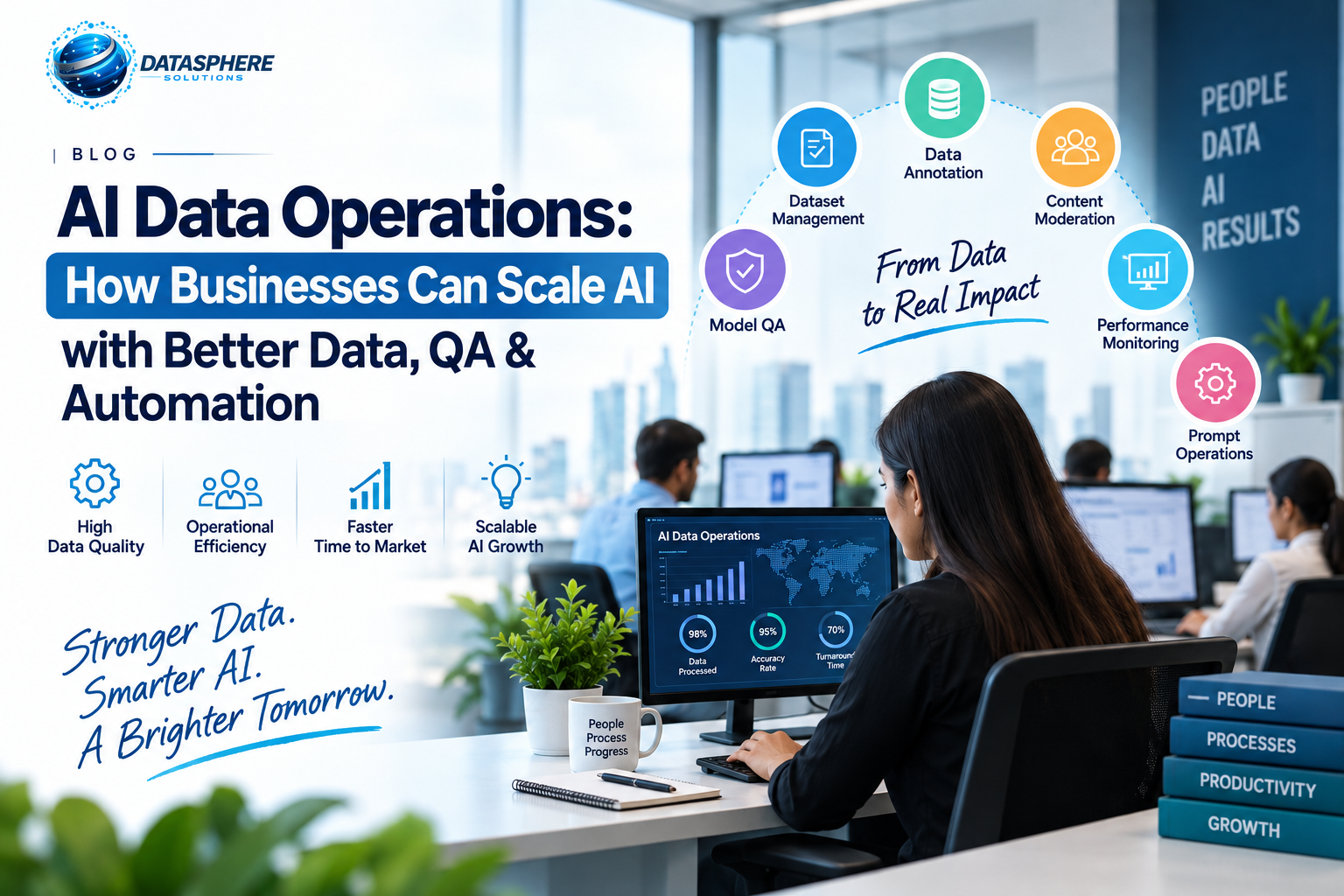




Customer expectations are changing rapidly. People expect faster responses, personalized interactions, and consistent support regardless of whether they contact a business through chat, email, phone, or another channel. This is where AI-powered customer support is becoming increasingly important. Businesses are using artificial intelligence to automate repetitive tasks, help agents find information faster, classify customer requests, summarize conversations, and improve support workflows. But AI is not simply about replacing customer service agents. The more practical approach is to combine AI automation with human expertise. In 2026, businesses that successfully connect AI, customer data, support teams, knowledge bases, and operational processes can create a customer support model that is both scalable and responsive.
AI-Powered Customer Support in 2026
Customer support has traditionally been a reactive business function. A customer experiences a problem, contacts the company, creates a ticket, and waits for an agent to respond. The support team then investigates the issue and works toward a resolution.
That model is changing.
Customer support is increasingly becoming an important part of the overall customer experience. Every interaction can influence how customers perceive a company, its products, and its brand.
AI is helping businesses move beyond simply answering customer questions. Modern AI-powered support can assist with understanding customer intent, finding relevant information, classifying tickets, routing conversations, summarizing interactions, and supporting agents during live customer conversations.
The result is a shift from traditional ticket management toward a more intelligent and connected support operation.
What Is AI-Powered Customer Support?
AI-powered customer support refers to the use of artificial intelligence technologies to assist with or automate different parts of the customer service process.
Instead of requiring support agents to manually handle every interaction, AI can assist with tasks such as understanding customer questions, identifying intent, retrieving information from knowledge bases, categorizing tickets, generating response suggestions, summarizing conversations, and routing cases to the appropriate team.
For example, when a customer submits a support request, an AI-enabled system can analyze the request, determine the likely category, identify relevant customer information, find applicable knowledge resources, and route the case to the appropriate support specialist.
The agent can then begin the conversation with more context instead of spending valuable time collecting basic information.
This does not eliminate the role of the support agent. Instead, it can make the agent more productive and allow more time for activities that require human judgment.
Why Businesses Are Adopting AI for Customer Support
Support teams are facing increasing pressure to handle larger volumes of customer interactions while maintaining service quality. Growing businesses may receive thousands of questions across email, chat, phone, social channels, and support portals.
Handling every interaction manually can become difficult as the business grows.
AI can help businesses manage repetitive work more efficiently. A large number of customer questions may involve common topics such as product information, account requests, order updates, basic troubleshooting, or frequently asked questions.
When appropriate workflows are automated, support teams can spend less time on repetitive tasks and more time resolving complex customer problems.
This can help businesses improve operational efficiency without treating customer support as simply a volume-management exercise.
AI and Human Support: Finding the Right Balance
One of the biggest misconceptions about AI customer service is that businesses must choose between artificial intelligence and human support.
The reality is more nuanced.
AI can be extremely effective when a customer request is repetitive, predictable, and supported by reliable information. However, customers with complicated technical problems, sensitive account issues, unusual requests, or complex complaints may need an experienced human specialist.
Imagine a customer contacting a company with a simple question about a product feature. AI may be able to provide the required information immediately.
Now consider a customer experiencing a complicated technical problem involving several systems and previous support interactions. The situation may require investigation, judgment, and communication between multiple teams.
This is where human expertise becomes important.
The most effective customer support model is therefore not necessarily AI versus humans. It is AI and humans working together, with each handling the types of work where they can provide the most value.
The Rise of AI Support Agents
Traditional chatbots were primarily designed to provide predefined answers to frequently asked questions. Modern AI support agents are moving toward more sophisticated workflows.
An AI support agent can potentially understand a customer's request, retrieve relevant information, search an internal knowledge base, summarize previous conversations, prepare a response, update a support record, and route the case when human intervention is required.
This creates opportunities to automate more than simple conversations.
However, businesses need to establish clear boundaries around AI-powered workflows. An AI system should have defined permissions, appropriate access to information, clear escalation rules, and human oversight for situations that require additional judgment.
The more responsibilities an AI system receives, the more important operational governance becomes.
Omnichannel Customer Support Is Becoming Essential
Customers do not think about support channels in the same way businesses do.
A company may have separate teams for email, chat, phone, and social media, but the customer simply sees them as different ways of communicating with the same company.
A customer may begin a conversation through live chat and later send an email. If the issue is still unresolved, they may eventually call customer support.
When these channels are disconnected, customers may have to repeat the same information several times. This increases frustration and creates additional work for support teams.
An omnichannel customer support operation connects these interactions so that relevant customer context can follow the conversation.
When agents can access previous interactions, open tickets, customer information, relevant knowledge, and escalation history, they can understand the situation faster and provide a more consistent experience.
This makes omnichannel support more than simply offering multiple communication channels. It is about creating a connected customer journey.
Customer Support Automation Beyond Chatbots
Customer support automation is often associated with chatbots, but automation can extend much further.
Businesses can automate or assist with ticket classification, prioritization, routing, knowledge retrieval, conversation summaries, internal notifications, customer updates, and other repetitive processes.
Consider a support team receiving hundreds of tickets every day. Without automation, agents may need to manually read every ticket, identify its category, determine its priority, and decide which team should receive it.
An AI-assisted workflow can perform some of this initial work automatically.
The support team can then focus its attention on solving customer problems rather than spending excessive time managing administrative tasks.
The objective is not to automate every customer interaction. The objective is to remove unnecessary repetitive work while maintaining customer service quality.
Why Quality Assurance Matters in AI-Powered Support
As businesses increase the use of AI, quality assurance becomes even more important.
Automation can increase the number of interactions a support operation can process. However, if an automated process produces inaccurate information, poor-quality responses, or inappropriate escalations, those problems can also scale.
For this reason, businesses need structured customer support quality assurance processes.
Support teams should regularly evaluate whether customer questions are being answered accurately, whether escalation decisions are appropriate, whether agents are following the correct processes, and whether customers are receiving consistent information.
These insights can then be used to improve knowledge bases, support workflows, AI configurations, agent training, and escalation processes.
Quality assurance should therefore be viewed as part of continuous improvement rather than simply a compliance activity.
Measuring the Success of AI Customer Support
The success of AI-powered customer support should not be measured by automation volume alone.
A business may automate thousands of interactions, but if customers continue contacting support because their issues were not resolved, the automation has not necessarily created a better experience.
Businesses should look at a broader set of customer support performance indicators.
Response time can show how quickly customers receive assistance, while resolution time can show how quickly their problems are actually solved. First-contact resolution can indicate whether customers receive effective help without repeated interactions.
Customer satisfaction can provide insight into how customers perceive the experience, while recontact rates can highlight situations where customers need to contact support again for the same issue.
Businesses should also monitor escalation rates, support backlog, quality scores, and customer effort.
Together, these metrics provide a more complete picture of whether AI is actually improving customer support operations.
How Businesses Can Prepare for AI-Powered Customer Support
Businesses do not need to transform their entire support operation overnight.
A practical approach is to begin by identifying repetitive workflows that are suitable for automation. Organizations can analyze their existing support interactions to understand which questions occur most frequently and which processes consume significant amounts of agent time.
The next step is creating a strong knowledge foundation. AI systems and support agents both depend on accurate and up-to-date information. Product documentation, FAQs, troubleshooting procedures, policies, and escalation guidelines should be organized so they can be easily accessed.
Businesses can then introduce automation into selected workflows and establish clear human escalation paths.
Once automation is operating, organizations should continuously measure its performance and use customer and agent feedback to improve the process.
This creates a cycle where data improves workflows, workflows improve support, and support data creates new opportunities for optimization.
The Future of Customer Support Is Human + AI
The future of customer support is unlikely to be defined simply by replacing human agents with artificial intelligence.
Instead, customer service is moving toward a hybrid model.
AI can help businesses handle repetitive requests, analyze customer interactions, retrieve information, automate workflows, and support agents. Human specialists can focus on complex issues, escalations, relationship management, troubleshooting, and situations where empathy and judgment are important.
When these capabilities are connected properly, businesses can create a support operation that is faster without becoming impersonal.
The real opportunity is not maximum automation.
It is intelligent automation combined with human expertise.
How DataSphere Can Help
Building an AI-enabled customer support operation requires more than adopting a new AI tool. Businesses need trained people, structured processes, quality assurance, technology integration, and ongoing operational management.
DataSphere Solutions provides customer support operations designed to help businesses manage customer interactions across channels while maintaining operational consistency and service quality.
With dedicated support teams, customer service workflows, QA processes, and scalable support operations, businesses can build a support model that combines technology with human expertise.
Explore DataSphere's Customer Support Operations: Customer Support Operations
Conclusion
AI-powered customer support is changing the way businesses approach customer experience.
Artificial intelligence can automate repetitive tasks, support agents, improve workflows, and help businesses manage growing customer interaction volumes. At the same time, human expertise remains essential for complex issues, sensitive situations, and interactions that require judgment.
The businesses that benefit most from AI will not necessarily be the ones that automate the most.
They will be the ones that understand where AI creates value, where human expertise matters, and how to connect both into one effective customer support operation.
In 2026, the future of customer support is not simply artificial intelligence.
It is AI-powered operations with human expertise at the center of customer experience.
Build an AI-Ready Customer Support Operation
Combine AI automation with dedicated support specialists, omnichannel coverage, quality assurance, and structured workflows to deliver faster and more consistent customer experiences.